
A Generac generator installation comes down to two decisions most homeowners don’t think about until the estimate: where the unit sits and how it gets its fuel. Get either one wrong, and you can end up with a generator that doesn’t pass inspection or sends exhaust toward a window. It can also bog down the first time the furnace and sump pump kick on at the same time. Here’s what Generac generator placement and gas line sizing involve. You’ll also see what our family-owned team checks on every Battle Creek site visit before anyone digs a trench.
| Key Takeaways: Generac generator placement starts with code. That means 5 feet from windows, doors, and vents, plus 18 inches from the wall on SwRI-marked models. The unit also needs open space in front, at the ends, and overhead.Local codes take precedence. A spot that passes on paper can still let exhaust in through soffit vents or furnace intakes.Gas line sizing depends on full-load fuel demand and how far the line travels. Pipe material and every other appliance on your meter matter, too.Existing gas lines rarely have room for a whole-home unit. Some homes may also need a utility meter upgrade.Michigan requires a MISS DIG 811 notice at least three business days before trenching. |
Where should a Generac generator be placed outside your home?
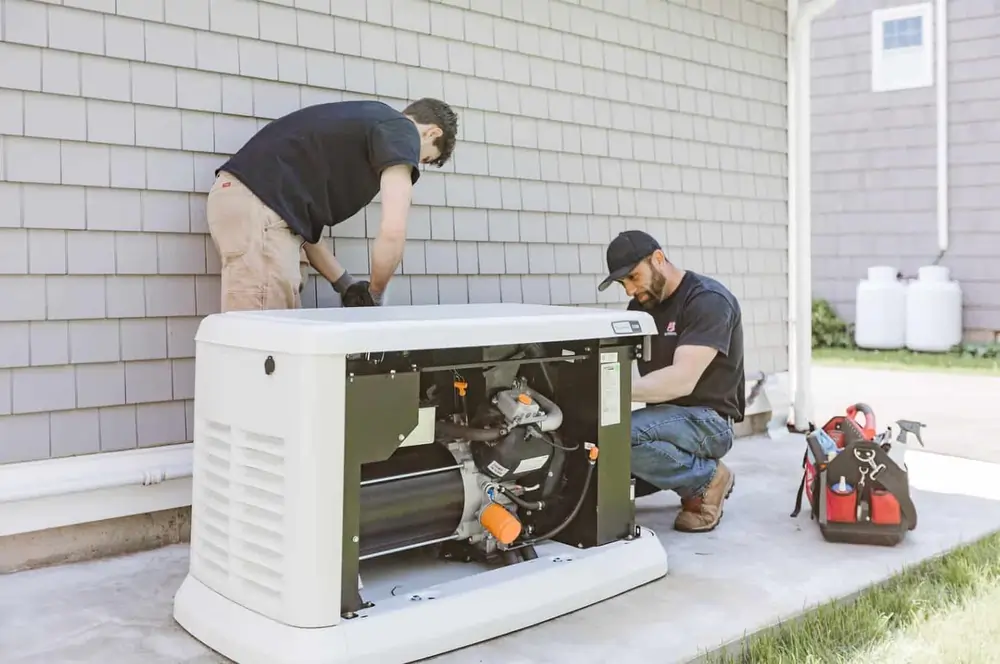
A Generac generator should sit outside on a level, well-drained base close to your gas meter and electrical service. It also needs enough distance from the house to keep heat and exhaust from causing problems, per NFPA 37, the fire safety standard for stationary generators.
What clearances does Generac require around the generator?
Generac’s published guidance lists the following minimums for its home standby units:
- 18 inches from the back of the generator to a stationary wall, but only on models marked with the Southwest Research Institute (SwRI) logo.
- 5 feet from any opening in the wall, including operable windows, doors, vents, and window wells.
- 3 feet of open space at the front and both ends, including shrubs, bushes, and trees.
- 5 feet of clearance above the unit, so no eaves, overhangs, or balconies hanging over it.
Units without the SwRI logo need 5 feet from combustible materials and 3 feet from non-combustible ones. Additionally, no home standby generator should go under a wooden deck.
Which spots look fine but still cause problems?
Meeting the minimums doesn’t guarantee exhaust stays out. Generac notes that carbon monoxide can slip in through soffit, attic, and crawl space vents. It can also sneak in through dryer vents, garage doors that don’t seal, and cracks around pipes; as well as corners and nooks in a given space.
This is where our 25+ years of HVAC experience in Battle Creek comes in. Generac warns never to point generator exhaust toward AC condensers or furnace vents; especially high-efficiency PVC intakes, which can pull fumes right back inside. Because we install these heating and cooling systems every day, we know exactly where your vents are and how to position your generator safely. Paired with carbon monoxide alarms on every level, you get complete peace of mind that meets strict CPSC safety standards.
How do Michigan winters change generator placement?
In Battle Creek, winter weather dictates generator placement just as much as clearance codes. Generac guidelines already require steering roof runoff, downspouts, and sump discharges away from the unit. A Calhoun County winter adds drifting snow and snowblower throw piles into the mix. Smart placement keeps your generator above the drift line, guarantees water drains away from the concrete pad, and ensures a technician can actually reach it for maintenance in February. Or, if you don’t already have one, investing in a slightly longer fuel line up front is always better than letting your generator sit in a springtime slush puddle.
Why does gas line sizing matter for a Generac generator?
Your generator can only produce its rated output if it receives enough fuel at the right pressure during peak demand. If the supply line is too small, problems quickly surface:
- Stalls during peak demand: The unit may idle fine, but it will drop pressure and stall the moment heavy loads like an AC compressor cycle on.
- Starving household appliances: A sudden surge from the generator can rob water heaters and furnaces on the same meter of needed fuel.
Generac specifies each unit’s BTU demand and required pressure (in inches of water column), but they leave the pipe sizing to the installer. That’s why tasks like calculating pipe diameter against total distance, pipe fittings, and meter capacity are critical parts of every CTI Mechanical site evaluation.
How do you size a gas line for a Generac generator?
CTI Mechanical sizes your gas line by cross-referencing your generator’s full-load fuel demand with national fuel gas code sizing tables.
Here’s what goes into that calculation:
- 100% full-load BTU demand: The line must be sized for peak power generation, not average or half-load ratings.
- Equivalent pipe length: Total run distance from the meter to the generator, including friction loss from every elbow and fitting.
- Pipe material & flow rates: Flow capacity varies significantly between black iron, CSST (corrugated stainless steel), and buried polyethylene.
- Supply & inlet pressure: Matching available gas meter pressure to the generator’s required inlet pressure (measured in inches of water column).
- Total connected load: Accounting for existing gas appliances (furnace, water heater, range) sharing the same meter to prevent whole-house fuel starvation.
How much gas does a Generac generator use?
It uses more than most people expect. A 26kW Guardian burns about 188 cubic feet of natural gas per hour at half load and about 333 at full load, according to its spec sheet. That’s roughly 333,000 BTUs per hour, several times what a typical furnace draws. Many current air-cooled Guardian models are rated for natural gas between about 3.5 and 7 inches of water column at the inlet.
A long line with too small a pipe will easily drop pressure below that required window. That’s why a whole-home generator often requires a 1-inch or larger supply line; which is significantly larger than the average 3/4-inch line running to your furnace.
Can your gas meter handle a whole-home generator?
Not necessarily. Your gas meter and regulator are rated for a maximum capacity. Running a generator alongside your furnace, stove, dryer, and water heater can easily exceed that threshold, especially with a tankless water heater, which can pull nearly 200,000 BTUs on its own. If your total demand exceeds capacity, your utility provider will need to upgrade the meter. In Battle Creek, this usually means coordinating with SEMCO Energy Gas Company, so it’s important to factor in that utility lead time early.
What happens during a Generac generator installation?
Here’s how a typical project with CTI Mechanical runs:
- We’ll walk the property and measure clearances. We’ll also note every window, vent, and intake near possible spots.
- We’ll review which circuits you want backed up, then confirm the right generator size.
- We’ll calculate the full-load gas demand, then size the line from the meter.
- We’ll handle the permits and inspections. We’ll also place a MISS DIG 811 notice at least three business days before trenching.
- We’ll set the pad and place the generator. Then we’ll run the gas and electrical connections.
- We’ll connect the automatic transfer switch and start the generator under load. Then we’ll check the inlet gas pressure.
- We’ll show you the controls and the weekly exercise cycle before we leave.
You can see how we scope the job on our generator installation page for the Battle Creek area.
How much does a Generac generator installation cost?
According to Angi’s 2026 whole-house generator cost data, installation costs average about $5,156 nationally, with costs typically ranging from $350 to $13,500. Any additional equipment for the installation process is its own line item. Placement and gas line sizing can also impact the final price you pay.
Considering an upgrade? Every estimate from CTI Mechanical is free. Flexible financing is also available through Michigan Saves. Contact us today to request your free estimate.
What do homeowners ask about Generac generator installation?
How close can a Generac generator be to my house?
Generac standby generators marked with the SwRI logo can sit as close as 18 inches from a stationary wall. The unit still needs 5 feet from any window, door, or vent. It also needs 3 feet of open space at the front and ends, plus 5 feet overhead. We always confirm local requirements before picking a spot.
Can I tie a Generac generator into my existing gas line?
No, usually not. The line running to your furnace or water heater was sized for those appliances. Adding a generator that can burn more than 300,000 BTUs an hour can drop the pressure for everything on it. Most installations need a new, properly sized line from the meter. We’ll measure the distance and the connected load before recommending a pipe size.
What size gas line does a Generac generator need?
Whole-home Generac generators often need 1-inch or 1-1/4-inch pipe, and longer lines may require larger pipe. The right size depends on the generator’s full-load BTU demand and the distance from the meter. Pipe material and your supply pressure affect the line length you need as well.
Do I need a permit for a Generac generator installation in Michigan?
Yes, most Michigan communities require permits for the electrical and gas work. Some also review placement and setbacks. Requirements vary by city and township. Michigan law also requires a MISS DIG 811 notice at least three business days before digging the trench. CTI Mechanical handles all permitting and inspections for every installation.
Should I run my Generac on natural gas or propane?
Natural gas is usually the simpler choice if your home already has gas service. The utility supplies fuel continuously, so you don’t have to refill a tank. Propane works well for rural properties without gas service. Generac requires a propane tank of at least 250 gallons. Propane units also typically need 10 to 12 inches of water column at the inlet. Both fuels need properly sized lines. We’ll walk through both options during a free estimate in Battle Creek, Marshall, or Springfield.
| Planning a Generac generator installation in Battle Creek? Our family-owned team has been helping local homeowners since 1998. We’ll walk your property and map out the best spot. Then we’ll size the gas line before you commit to anything. Call to schedule your free estimate. |